
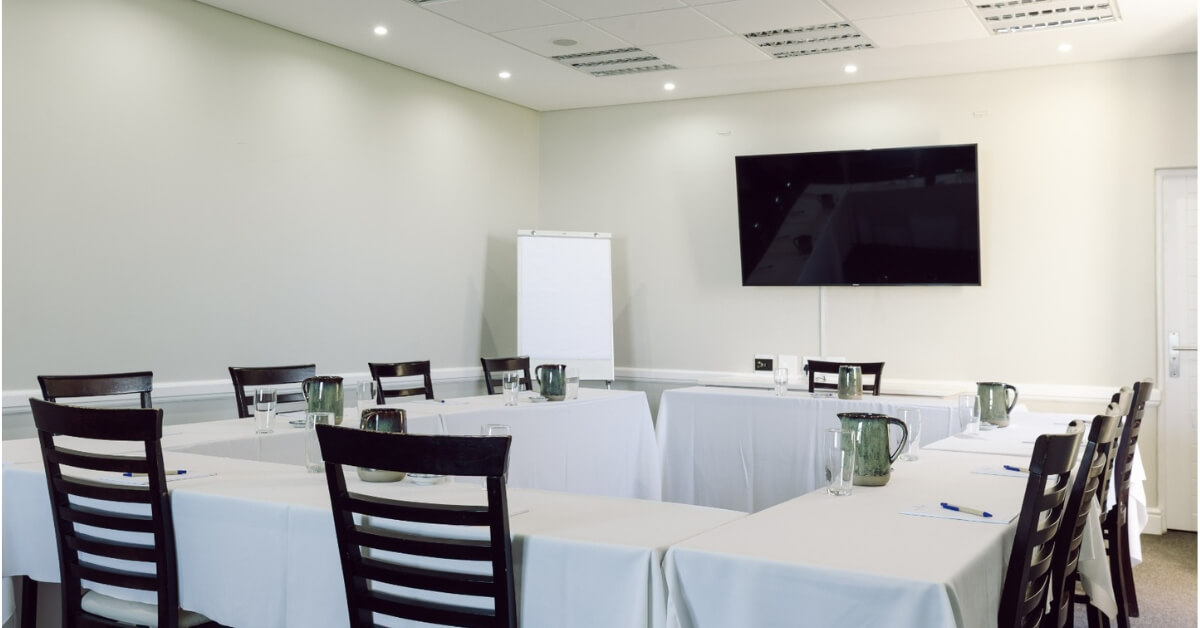
Most people searching for function venues open a browser, type the name of their city, and reach for the first result that looks big enough and has parking. The result is often a forgettable conference in a hotel wing that could have been anywhere. This guide covers what a venue actually needs to provide, from capacity and catering to technology and location, before you compare a single price or floor plan, and why Blue Bay Lodge could be the perfect venue that ticks all the boxes.
1. Does the Room Fit Your Group in Your Seating Format?
Ask this because the room is the one part of your event you cannot adjust on the day. If the space turns out to be wrong for the way your session needs to run, you end up changing the event to fit the venue: dropping the workshop tables, moving people into rows, or splitting a group that should have stayed together.
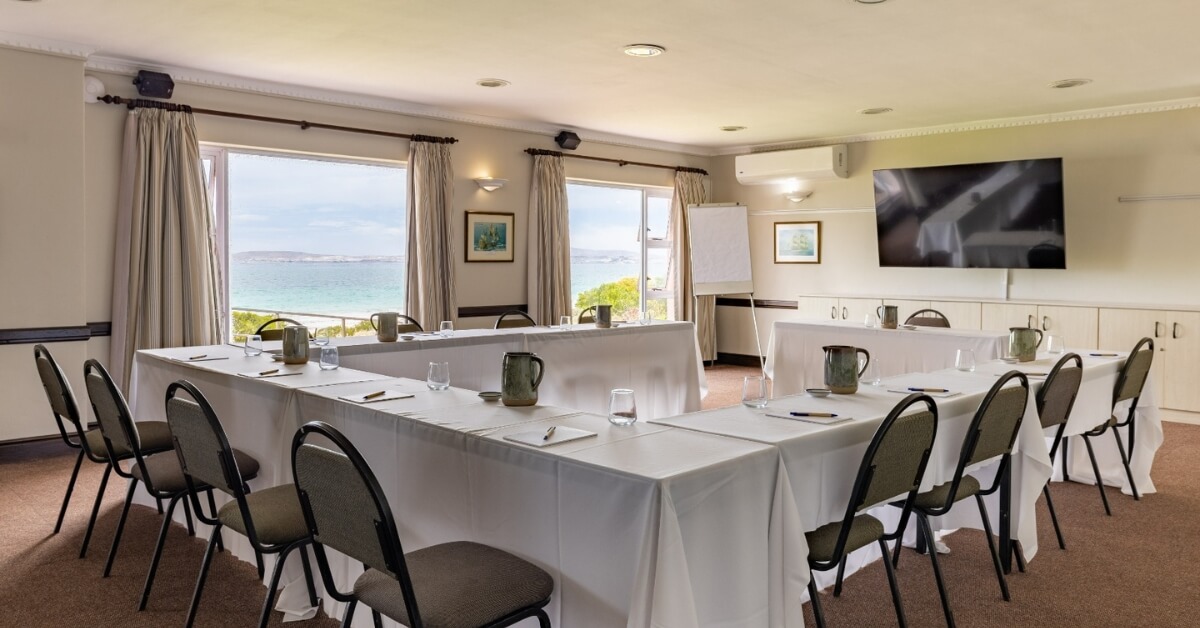
Two answers settle it, and both should come from the venue in writing before you shortlist: what the room holds in the format you are actually using, and whether the space can be reconfigured once your event is underway.
Why Do Advertised Capacity Numbers Often Mislead?
Advertised venue numbers are almost always based on theatre-style seating, which rarely matches the format a corporate event requires. Seat the same group around round tables for a banquet, and comfortable capacity drops from 100 to around 60 or 70. Always confirm the figure in the format your event requires: theatre, banquet, classroom, boardroom, or cabaret.
Why Are Partitionable Conference Rooms Worth Prioritising?
A partitionable room gives you the flexibility to host one large session and two smaller breakout groups in the same space, without booking two separate halls for hire. We offer two sea-facing conference rooms, including the Oyster Catcher room, which partitions into independent sessions of 45 delegates each, making it a practical solution for full-day conferences. The right capacity question is not only “How many people fit?” but “How do they need to sit for an effective event?” Confirm both in writing before you commit to any venue for conference use.
2. Is There Accommodation on the Same Property?
Ask this before you compare conference rates, because the answer decides what your event can include after five o’clock. Rooms on site let a strategy day run into a dinner and a next-morning session with nobody driving afterwards, which matters most at a year-end function where drinks are served and half your team is 90 minutes from home.
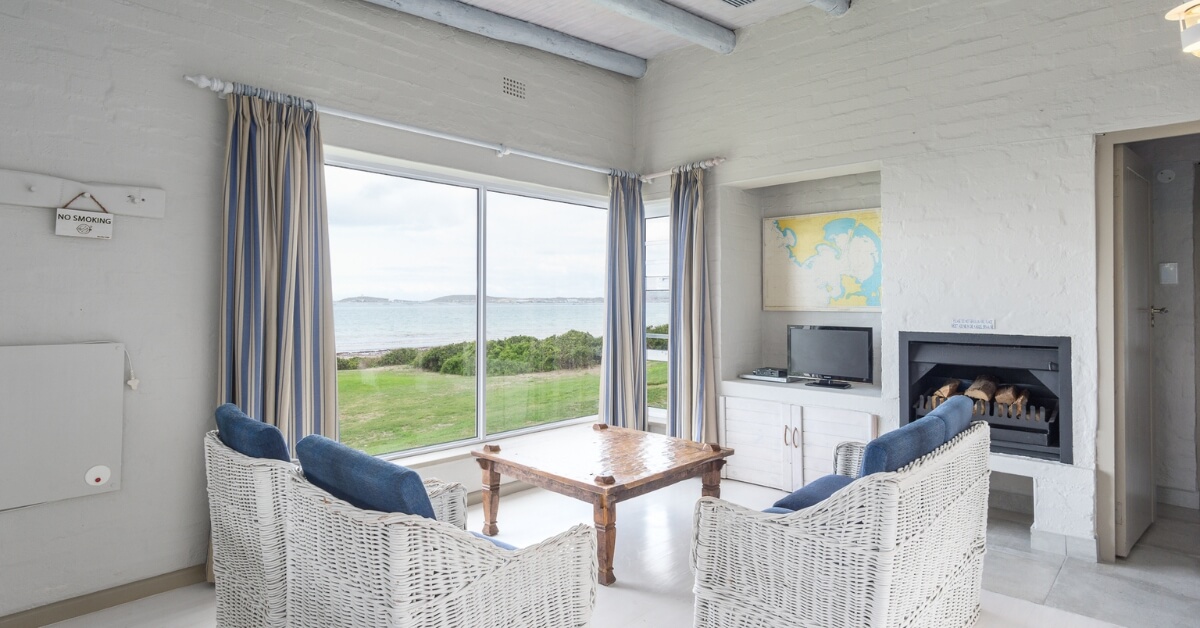
Where accommodation sits elsewhere, you are managing transfers between two properties, two sets of terms, and two cancellation deadlines, and every one of those falls to the event organiser rather than the venue.
What Room Types Are Worth Asking About?
En-suite lodge rooms, poolside suites, and self-catering cottages each serve different delegate needs. Look for the following options:
- En-suite lodge rooms: suitable for single-night stays and delegates who prefer independence
- Poolside suites: a comfortable option for those needing slightly more space
- Self-catering cottages: practical for small groups or delegates who prefer privacy, each with its own braai area
3. Is the Catering Managed In-House?
This one is worth asking before you compare quotes, because catering is usually the largest variable cost on the page and the only line item every attendee experiences directly. It is also the hardest thing to compare between venues: an in-house kitchen quotes you a per-head rate, while an outsourced arrangement may carry a supplier markup, a minimum spend, or a service charge that only appears once you ask for a breakdown.
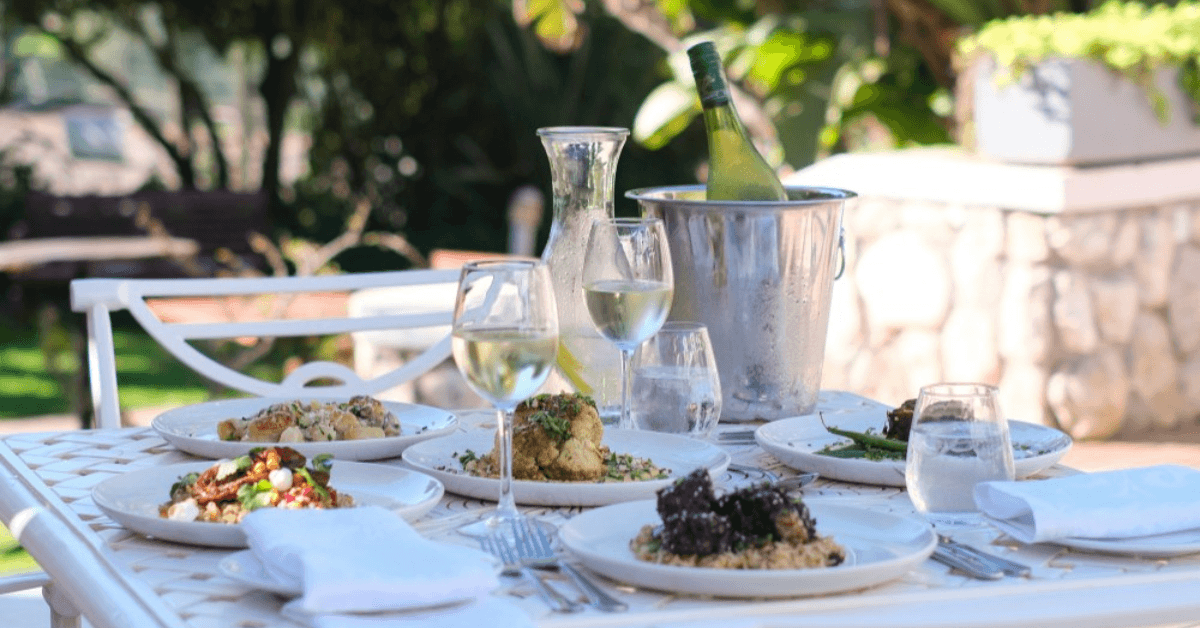
Catering quality shapes a work event more than most planners anticipate, and a well-timed meal tells your team the event was thought through in a way the agenda never does.
What Questions Should You Ask Before You Sign?
The most important questions cover catering ownership, dietary provisions, and whether the kitchen can scale for larger events. Before committing to any private event venues or halls for hire, work through the following with the venue coordinator:
- Is catering managed in-house or outsourced to an external supplier?
- Can the kitchen accommodate halaal, vegetarian, vegan, and gluten-free requirements, with clear labelling on every dish?
- What does a full-day conference package include: morning tea, lunch, and afternoon refreshments?
- Can the kitchen scale up to a formal seated dinner for year-end function venues?
- Does the venue have a restaurant that operates independently of group bookings on a daily basis?
In-house catering is more reliable: the kitchen understands the space, timing aligns with the event schedule, and dietary needs do not fall between suppliers.
4. Are the Wi-Fi and AV Equipment Included and Reliable?
Most venues answer this with reassurance rather than detail, so the question has to be put in specifics. Technology is the one part of your event that fails in public: when a presentation stalls, a room of 60 people watches it happen, and the momentum you built over the morning goes with it. Note too that “available” is a billing word rather than a provisioning one, so establish what comes with the room rate and what appears later as a hire cost.
- Dedicated Wi-Fi: Whether the event space runs on a connection separate from the general guest network.
- Included AV equipment: If the projector, screen, lapel or handheld microphone, and PA system come with the room.
- On-site technical support: Whether someone is in the building during the event, not just reachable on an emergency number.
5. What Does the Backup Power Actually Cover?
Backup power is only useful if you know exactly which parts of the building it keeps running. South Africa recorded more than 300 consecutive days without load shedding by March 2026, according to the South African government, but a venue in a rural or coastal area still deals with local outages, storm damage, and grid faults that have nothing to do with national scheduling. A venue that answers “yes, we have a generator” without detail has not answered the question.
Which Systems Should You Ask About Specifically?
AV and lighting, the kitchen, and air-conditioning are three separate electrical loads, and not every backup system carries all three. Confirm the following in writing:
- Conference equipment: Whether the projector, screen, microphones, and PA system stay live through an outage, or only the lights.
- Kitchen: If catering can continue on schedule, because a delayed lunch shifts every session that follows it.
- Air-conditioning: Whether climate control is on the backup circuit, which matters for a full room in a Western Cape summer.
- Wi-Fi and connectivity: If the router and fibre equipment are on a UPS, since these are often overlooked.
- Switchover time: Whether the transfer is instant or leaves a gap, because 30 seconds of darkness mid-presentation breaks the room.
- Runtime: How many hours the system holds and whether fuel is kept on site.
6. Will Your Group Have the Property to Itself?
Exclusivity determines whether your event feels like a private occasion or a booking that happens to share a building, and it shapes the atmosphere more than most planners anticipate. A strategy session runs differently when another group is checking in at reception during your break, and a year-end function lands differently when the pool area is shared with holiday guests. This is the question most often left until after the deposit is paid.

What Should You Ask About Exclusivity?
The answer is rarely a simple yes or no, so ask about each area of the property separately:
- Confirmed bookings: Whether other groups are already booked for your dates, and how many.
- Conference wing: If your rooms are self-contained or open onto shared corridors and public areas.
- Sole use: Whether full exclusive use of the property is available, and what supplement applies.
- Restaurant access: If dining areas remain open to outside visitors during your event, and whether a private dining space is available.
- Shared facilities: Whether the pool, gym, and other amenities stay open to other guests while your group is on site.
- Noise: If a late function will be restricted by other bookings, and until what time music is permitted.
7. Who Will Be On-Site to Coordinate the Day?
An on-site coordinator is the difference between a schedule that adjusts quietly and one that visibly comes apart. Every event runs into something unplanned: a session overruns, a delegate arrives with a dietary requirement nobody logged, a microphone cuts out ten minutes before the keynote. What matters is whether someone with authority is standing in the building to solve it, or whether you are calling a mobile number and waiting.
What Makes a Coordinator Genuinely Useful?
A single coordinator across accommodation, catering, and AV also means one point of contact and one invoice, which removes the coordination risk that comes with sourcing a hall, a caterer, and overnight rooms separately. Confirm the following before you sign:
- Named contact: Whether a specific person is assigned to your booking, rather than a general events inbox.
- On-site presence: If they are physically at the venue for the duration of your event, not managing several bookings remotely.
- Decision authority: Whether they can approve a change to timings or catering on the day without escalating.
- Handover: Who takes over if your coordinator is unavailable, and whether that person has been briefed on your event.
- Scope: If the same person handles accommodation, catering, and AV, or whether these sit with three separate departments.
- Pre-event walkthrough: Whether you can meet them on site before the event to confirm the room setup.
Why Are West Coast Function Venues Worth Considering?
West Coast function venues are worth considering because the 90-minute drive from Cape Town is an asset, not a compromise. For teams spread across the Southern Suburbs, Bellville, and Milnerton, the Cape Town CBD is rarely as central as it appears, and peak-hour traffic adds stress before the event has started.
What Makes the West Coast Different from City Venues?
The West Coast differs from city venues in three key ways: the R27 coastal drive transitions delegates mentally before the event begins, outdoor space is abundant, and the budget typically stretches further for comparable facilities. Delegates arrive having left work behind, which is exactly what you want before a strategy session or year-end function.

West Coast venues sit roughly 150 kilometres from Cape Town, placing them in the 60-to-90-minute window event professionals consider ideal: far enough to feel like a genuine departure, close enough that no one needs to fly. For year-end function ideas, Cape Town teams often default to the same wine estate or hotel ballroom. The West Coast offers coastal light, Saldanha Bay views, and outdoor space a city venue cannot replicate.
What Activities Work for Year-End Functions and Staff Parties in This Area?
The Saldanha Bay area offers kitesurfing, hiking, paddleboarding, and sunset braais that turn a staff party into a genuinely memorable experience. Staff party venues Cape Town companies are shortlisting increasingly, including West Coast options, with the following available close to hand:
- Langebaan Lagoon: A 20-minute drive away, is a premier kitesurfing destination also suited to kayaking, paddleboarding, and sailing
- West Coast National Park: Offers mountain biking, hiking, and birdwatching across more than 250 resident and migratory species
- Postberg Flower Reserve: Open from 1 August to 30 September annually, provides the West Coast’s famous wildflower display as an off-site excursion
- On our property: A swimming pool, tennis court, beauty salon, private gym, and direct beach access
Why Consider Blue Bay Lodge?
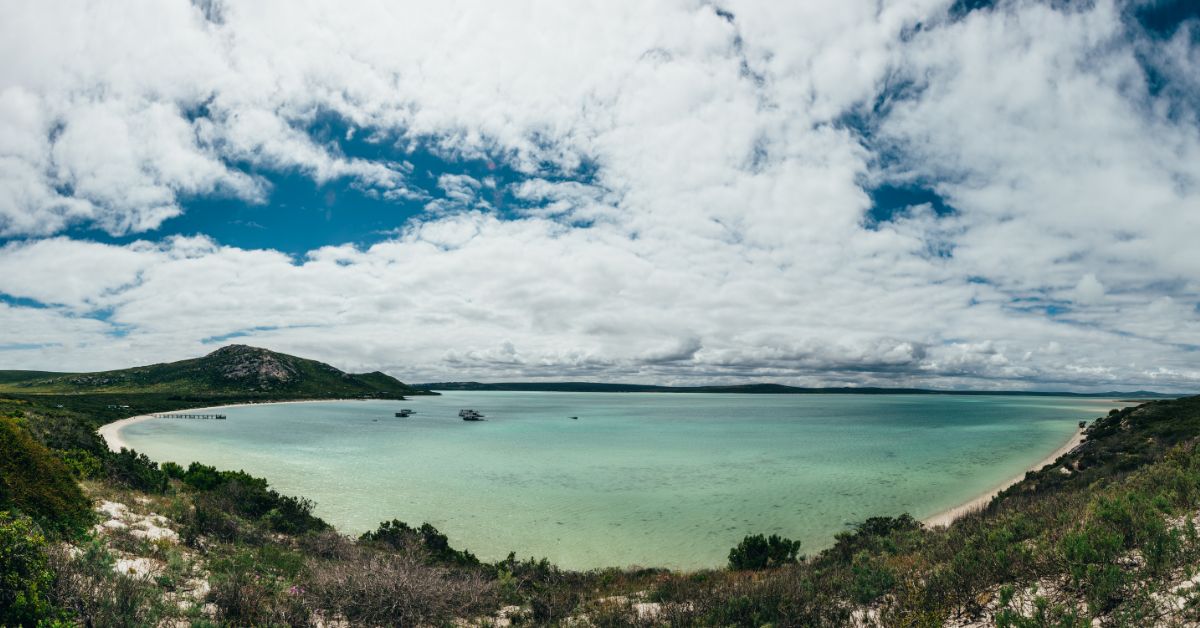
Blue Bay Lodge sits on the Saldanha Bay coastline, about 90 minutes from Cape Town, with two sea-facing conference rooms. The Oyster Catcher partitions into two independent sessions of 45 delegates each, which works for a full day that needs to break into groups after lunch. Page four of our conference brochure gives the numbers by seating style.
Accommodation is on the same property: 33 en-suite rooms, one executive suite, and 14 self-catering cottages set among Cape Fynbos, sleeping up to 136 guests. A strategy day can run into dinner and a next-morning session without anyone driving home in between. Catering is in-house, from our restaurant the Blue Bay Café, which serves guests and walk-in visitors daily from a varied menu. The kitchen runs at a professional standard every day of the week, not only when a conference group books. One supplier, one invoice, one coordinator across your rooms, your catering, and your conference setup.
Between sessions there is a swimming pool, tennis court, private gym, beauty salon, and direct beach access, with Langebaan Lagoon a 20-minute drive away for kitesurfing, kayaking, and paddleboarding. An afternoon on the lagoon or a sunset braai gives staff a shared experience a hotel dinner cannot.
Frequently Asked Questions
The following covers what event planners most commonly ask about hall-to-rent options on the West Coast.
1. What is the difference between renting a hall and booking a private event venue?
When renting a hall in a shared space, your event runs alongside other guests and groups. Private event venues, where your group is the only booking, give you greater control over timing, noise, and atmosphere. For sensitive sessions or year-end celebrations, ask about exclusivity before confirming.
2. What activities are available near West Coast function venues?
The Saldanha Bay area offers kitesurfing and kayaking on the Langebaan Lagoon, mountain biking in West Coast National Park, and whale watching in season. On our property, guests have access to a swimming pool, tennis court, beauty salon, and beach. Come have a look at our function venues
3. How far in advance should I book year-end function venues?
Popular function venues in the Western Cape book out seven months in advance for Thursdays and Fridays in November and December. Confirm your venue no later than June if your event is in the last quarter of the year.